If you've spent years building a website that ranks well on Google, here's an uncomfortable question: what happens when your customers stop clicking through search results at all?
That's already happening. More people are asking ChatGPT, Claude, Gemini, Google AI, or Perplexity a question and taking the answer at face value, no click required. So when an AI model has to decide which businesses to mention, what is it actually looking at?
AI models weigh third-party validation, brand authority, and outside citations far more heavily than the words on your own homepage. Your website still matters. It's just no longer the main event.
Why AI Search Now Relies on Third-Party Validation
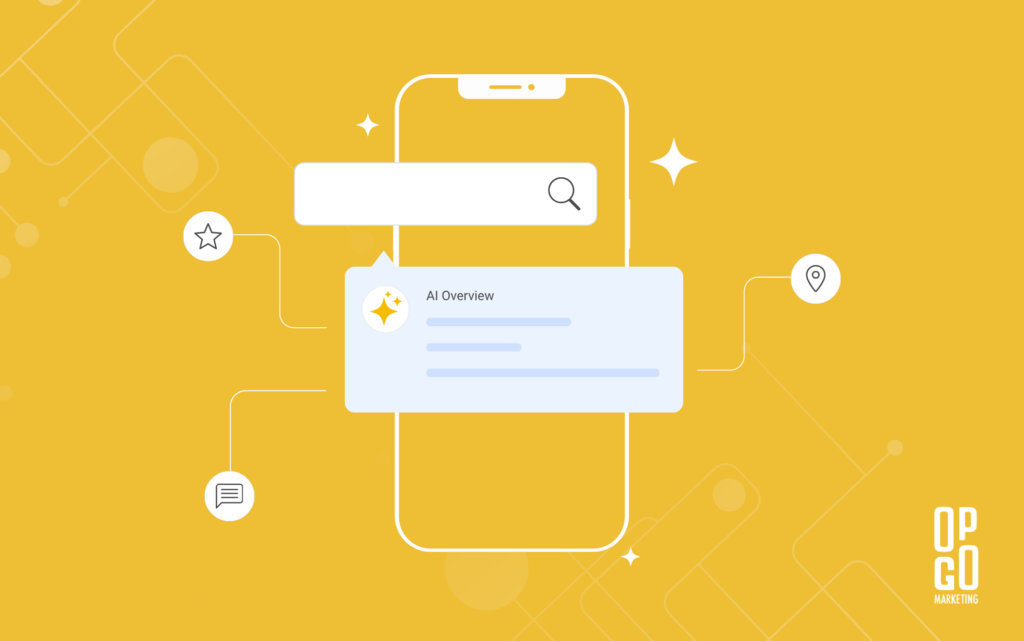
Traditional SEO rewarded businesses that used the right keywords in the right places. That's not gone, but it's no longer enough on its own. This shift has a name (or two): Generative Engine Optimization (GEO) and Answer Engine Optimization (AEO). In plain terms, it means optimizing for how AI models synthesize an answer, not just how a search engine ranks a page.
Here's the difference that matters for your business: AI models don't just crawl your site and take your word for it. They look for outside confirmation that what you're saying is true.
How AI Search Engines Decide Which Businesses to Cite
When someone asks an AI tool a question like "best custom home builder near me" or "top architecture firm in [your city]," the model is weighing several signals at once:
- Structured data – Behind-the-scenes code (called schema) that tells search engines exactly what your business is, where it's located, and what you offer.
- Third-party citations – Directory listings, review platforms, news coverage, and industry associations that mention your business independently of your own site.
- E-E-A-T signals – Experience, Expertise, Authoritativeness, and Trustworthiness, shown through the depth of your content and who else references it.
- Direct-answer content – FAQs, clear definitions, and quick-answer sections that an AI model can easily pull and reuse.
- Google Business Profile – How complete your profile is, and how many reviews you've earned.
- Consistency – Whether your business name, address, and phone number match across every platform where you're listed.
Building Third-Party Trust Through Reviews and Directories
Think about how you'd research a big purchase yourself. Would you trust a company's own description of itself, or would you look for reviews, a mention in the local news, or a friend's recommendation first? AI models are doing something similar. They're piecing together a picture of your business from every mention across the web, not just your own site. Here is a good starting point:
Claim and Complete Your Listings
Google Business Profile, Houzz, Angi, and industry-specific directories (like NAHB builder listings or AIA member directories): an incomplete or outdated listing is a missed opportunity.
Actively Ask For Reviews
Review volume is a weighted signal, and most happy customers are willing to leave one on Google, Facebook, or Houzz if you simply ask at the right moment.
Show Up Where Your Industry Already Talks
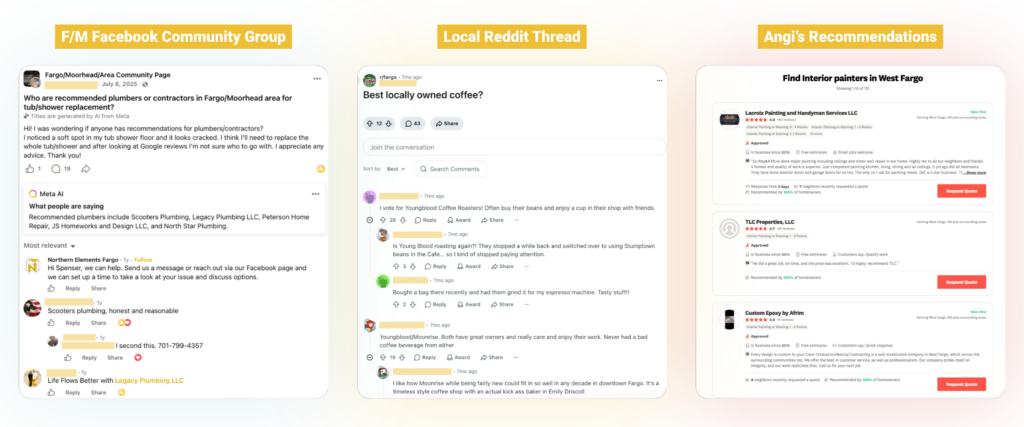
Reddit (industry or city-specific subreddits), Quora, and local Facebook groups are increasingly cited by AI tools. If your team can answer a real question in one of these spaces, that's a citation pathway your competitors may not have built yet.
Don't Overlook Local and Regional Mentions
Chamber of Commerce listings, local news coverage, and community sponsorships all add up to the kind of outside validation AI models are piecing together.
Let Your Team's Expertise Show Up in AI Search Results
Here's the reality: the people at your company who talk to customers every day, whether that's on the phone, at the counter, or on a job site, already answer these exact questions all the time. They just don't usually answer them anywhere an AI model can find them.
Encouraging a few of them to answer questions in relevant online communities isn't a big lift. It's often the fastest way to build the kind of third-party presence AI search rewards, and it feels more natural than sticking to a content calendar.
Creating Content Other Sites Want to Cite
The other half of this equation is publishing content that's actually useful enough for other sites to reference. Think cost guides, how-to explainers, or project insights specific to your industry.
The goal isn't only to write something that ranks. It's to write something worth linking to. That's what earns the outside citations AI models are looking for in the first place.
What Third-Party Validation Means for Your Business
AI visibility isn't something you can control entirely from your own website anymore. It's built through trusted third-party conversations and brand mentions happening across the web, whether that's a review, a directory listing, a forum answer, or a guide another site links to.
Teams that build this kind of presence over time often see stronger visibility in AI-powered search results. There's no guaranteed ranking or overnight fix here, just a more complete picture of how these tools actually work.
Try It Yourself: How Does Your Business Show Up?
Here's a challenge: run a few searches you think your customers would ask, in ChatGPT, Google's AI Overviews, or whatever tool you use most. Are you showing up? Are your competitors ahead of you? Are you not showing up at all?
Whatever you find, we can help you fix it. Book a free exploratory call with our team, and we'd love to walk through what you find and where to go from here.