If you're running digital marketing campaigns, you probably know how important it is to track where your traffic is coming from. But how do you get all those insights without guessing? That’s where UTM parameters come in. Trust us, they’re a game-changer for understanding exactly what’s working and what’s not.
What Are UTM Parameters?
Okay, UTM (which stands for Urchin Tracking Module, but let’s just call it UTM for short) parameters are just little bits of information you add to the end of a URL. When someone clicks that link, the info gets passed along to your analytics tool, like Google Analytics, so you can see exactly where that traffic came from.
Basically, they help you track web traffic from specific campaigns, platforms, and even individual posts. It’s like giving your links a secret identity tag that tells you exactly what’s going on behind the scenes.
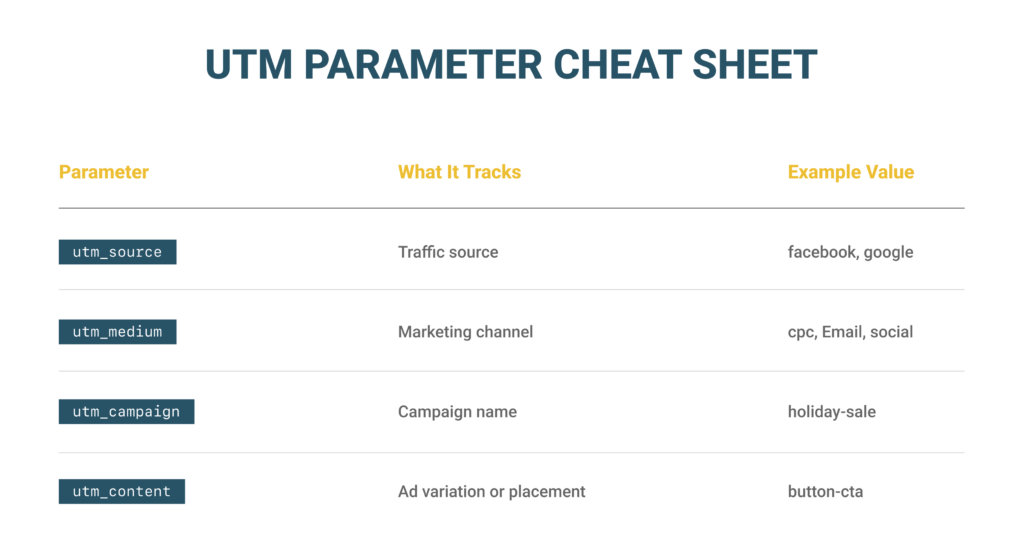
Here’s an example of a URL with UTM parameters:
www.opgomarketing.com/?utm_source=facebook&utm_medium=cpc&utm_campaign=2025-marketing-guide&utm_content=carousel-a
Let’s break it down:
- utm_source=facebook: This tells you the traffic came from Facebook.
- utm_medium=cpc: This indicates that it's a paid ad (Cost Per Click).
- utm_campaign=2025-marketing-guide: This shows that it’s part of the 2025 marketing guide campaign.
- utm_content=carousel-a: This helps differentiate between ads or posts in the same campaign. In this case, UTM content specifies “Carousel A” (potentially vs Carousel B)
How Do UTM Parameters Work?
When you add UTMs to a link and share it (via email, ads, social media, etc.), every click on that link sends that UTM information to Google Analytics or another platform. You’ll then see exactly where your traffic is coming from, which campaigns are working best, and how visitors behave once they land on your site.
Why Should You Use UTM Parameters?
Better Insights on Campaign Performance
UTMs help you track exactly where your visitors are coming from, whether it’s from Facebook, an email campaign, or a QR code. This helps you understand what’s driving the most traffic, so you can optimize your efforts moving forward.
Track Specific Content
Say you’re posting a series of blog articles or social media posts, and you want to see which one performs better. UTMs let you track specific content performance, so you know what resonates with your audience.
Make Smarter Marketing Decisions
With all this data, you can stop guessing. You’ll know what’s working and what isn’t—so you can double down on the strategies that bring the best results.
Keep Everything Organized
Without UTMs, you’d just be lumping all your traffic together. That means you wouldn’t be able to tell which specific ad or post drove the most clicks or sales. With UTMs, you can track each campaign separately for better insights.
Measure Your ROI
Ultimately, UTMs help you see where your marketing dollars are going. Are your ads delivering the results you want? Is your social media strategy driving traffic? UTMs give you the clarity you need to see if you're getting a solid return on your investment.
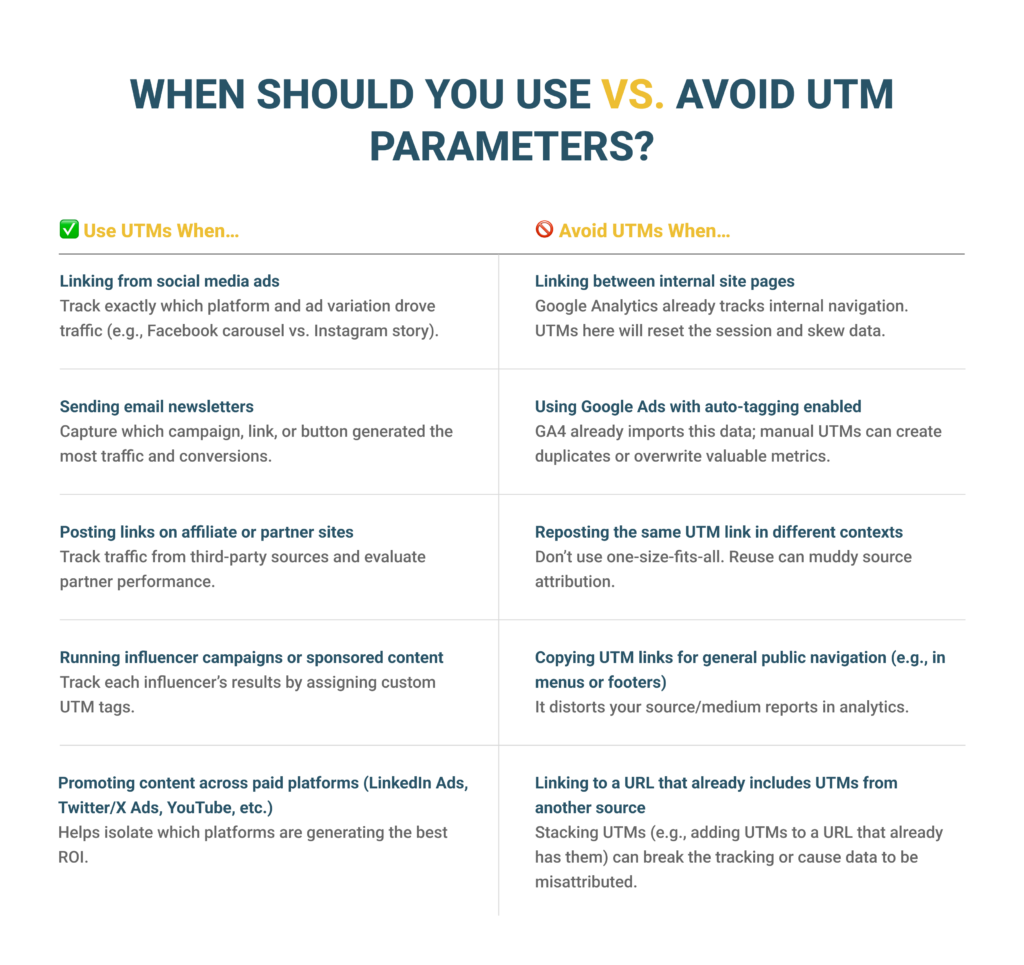
When Should You Avoid UTM Parameters?
UTM parameters are powerful tools for tracking where your web traffic is coming from—but they aren’t meant for every situation. Used correctly, they give you clear insights into campaign performance. Used incorrectly, they can create messy, misleading data. Here’s a quick guide to when you should use UTMs, and when to leave them out.
Best Practices for Using UTM Parameters
Here are a few quick tips to get the most out of your UTMs:
- Keep It Consistent: When naming campaigns, sources, and mediums, consistency is key. For example, always use utm_medium=cpc for paid ads or utm_medium=email for email campaigns. This will help you keep track of everything easily.
- Use a UTM Builder: There are tools like Google’s URL Builder or other UTM generators that help you create UTM links without any mistakes. This is especially useful when managing multiple campaigns.
- Don’t Overcomplicate It: Keep your UTMs simple and clear. You want to track what's most relevant to your campaigns—source, medium, and campaign name. Avoid adding unnecessary parameters that could confuse things.
- Track in Google Analytics: Set up a Google Analytics to properly report on UTMs. This will help you quickly see where your traffic is coming from and make sense of the data.
- Stay Organized: If you’re running multiple campaigns, it can get chaotic. Use a spreadsheet or tracking tool to stay on top of all the UTMs you’re creating.
Why UTM Parameters Are a Must-Have for Your Marketing Campaigns
If you’re serious about tracking the effectiveness of your digital campaigns, UTM parameters are a must-have. They provide clear, actionable data that shows you exactly where your traffic is coming from and how your marketing efforts are performing. With this information, you can make smarter, more data-driven decisions and ultimately get better results from your campaigns.
If you haven’t started using UTMs yet, it’s time to give them a try. They’re an easy way to track, measure, and improve your marketing efforts—and you don’t want to miss out on the valuable insights they can offer. Need help with your digital marketing strategy? Contact OpGo Marketing for a free exploratory call. Let us help you optimize your campaigns and get the results you’re