This is one of the most common questions we hear from clients working on AI search: "Okay, so when will we actually show up?"
There isn't a magic number we can give you. It's not always a week, a month, or six months. If someone promises you an exact date, we'd be a little skeptical. AI search doesn't work quite like traditional search. There are a lot of moving pieces, and how quickly you start showing up depends on where your business is starting from and what you're doing to build your online presence. Instead of giving you a made-up timeline, let's talk about what actually affects it and what you can realistically expect.
Why There's No Simple Answer to This Question
Traditional SEO gave us a few milestones to watch. You submit your sitemap, optimize your website, build some links, wait a while, and (hopefully) watch your rankings climb.
AI search is a little messier. Tools like ChatGPT, Google's AI features, and other AI-powered search experiences can pull information from all over the web. That might include your website, Google Business Profile, reviews, directory listings, news articles, other websites mentioning your business, and the content you're publishing.
A customer might leave you a review tomorrow. A directory could take weeks to update. A blog post might eventually earn a mention or backlink from another website. Your business might already have years of information floating around online that AI systems can use. Learn more about the importance of third-party validation.
What Actually Affects Your AI Search Timeline
There are a few things that can make a pretty big difference.
Your existing online presence
If your Google Business Profile is fully filled out and you already have a decent number of reviews, you're starting ahead of a business that's never touched it. If your online presence has been sitting untouched since 2018, you've got a little catching up to do.
Third-party validation
AI search isn't only looking at what you say about yourself. Reviews, directory listings, media mentions, industry websites, and other businesses talking about you can all help build a clearer picture of who you are and what you do. The more credible information that's out there, the more there is for search engines and AI tools to work with.
The content you're publishing
Not every blog post is going to make a difference. Content that's actually useful tends to have more staying power. Think pricing guides, FAQs, how-to articles, comparisons, service explainers, and answers to the questions your customers are already asking.
In other words, write for the person Googling you at 10 p.m. because they need an answer, not just for a keyword.
Consistency across the web
Your business name, address, phone number, services, hours, and other key details should be consistent everywhere your business appears online. If one directory says you're on Main Street and another has an old address from three moves ago, that's not helping search engines connect the dots.
Your industry and location
A specialized business serving a smaller market may have a very different path to AI visibility than a business competing for broad, highly competitive searches in a major metro.
A Realistic Timeline For Ranking in AI Search Results
We can't give you a calendar date, but we can give you a general idea of what the process can look like.
Months 1 to 3: This is foundation-building. Claiming and completing listings, cleaning up inconsistent business information, and starting to ask for reviews. You likely won't see much movement yet, and that's normal.
Months 3 to 6: This is where things start to show up. New reviews and directory listings get indexed. Early content pieces start earning a few mentions or links. You might start noticing your business appear in AI search for a handful of specific, less competitive questions.
Months 6 to 12: This is where consistent effort compounds. More third-party mentions, a stronger content library, and a more complete online presence all start working together. This is typically when businesses see the most noticeable shift in how often they show up.
Again, these ranges are a general guide, not a guarantee. Teams that stay consistent tend to see stronger results over this window, but nothing here happens overnight.
What Speeds Things Up (and What Slows Things Down)
A few things tend to speed the process along:
- Actively asking happy customers for reviews instead of waiting for them to volunteer one
- Publishing content that's specific and genuinely useful, not just keyword-focused
- Keeping your business information consistent everywhere it's listed
- Showing up in relevant online conversations, not just on your own website
And a few things tend to slow it down:
- Letting listings sit incomplete or outdated
- Publishing content that's too generic to be worth citing
- Treating this as a one-time project instead of an ongoing effort
There isn't a universal timeline. Businesses that consistently build their online presence — through useful content, accurate listings, customer reviews, and credible mentions across the web — are giving themselves more opportunities to be found and referenced over time.
It's less like flipping a switch and more like building momentum. Unfortunately, there's no shortcut button for that one. (If there were, everyone would be doing it.)
What Shows Up in an AI Search Answer
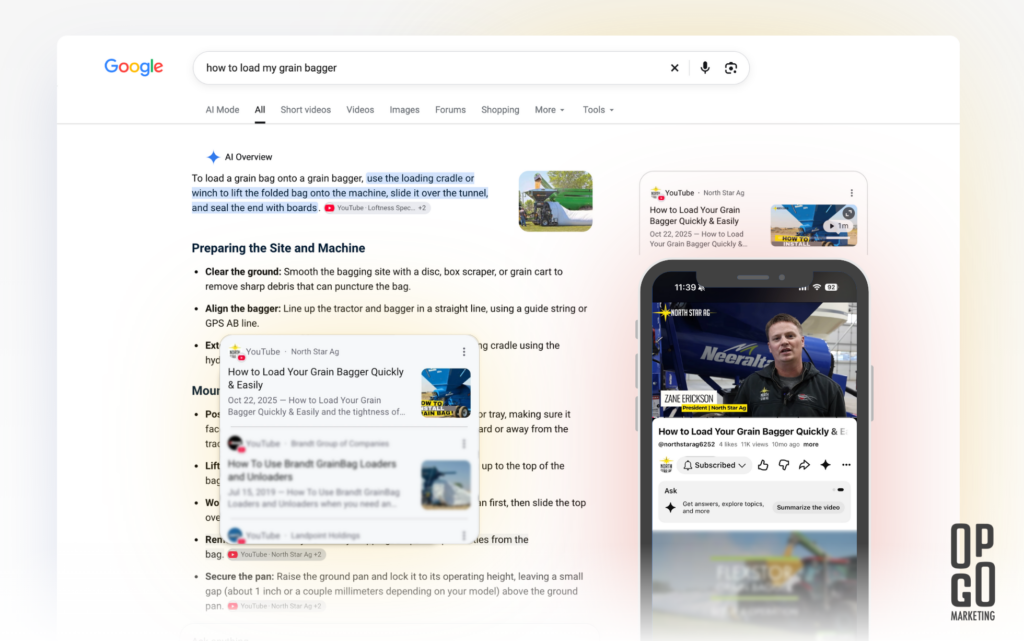
It's easy to picture an AI answer as a few lines of text with a source link, but that's only part of the picture. Depending on the platform and the question, an AI-generated answer can pull in:
- Images and photos, especially for visual categories like home design, products, or portfolios
- Maps and local listings, often tied directly to your Google Business Profile
- Videos, when a platform indexes video content as part of its answer
- Product or pricing snippets, particularly for e-commerce or service comparisons
- Direct text citations, the most common format, but far from the only one
This matters for your timeline too. A business with strong photos, a complete Google Business Profile, and video content has more ways to show up than one relying on text alone.
AI answers rarely cite just one source. Most platforms pull from several mentions or links to build a single answer, which means showing up isn't winner-take-all the way a top Google ranking is. There's more room for multiple businesses, including yours, to be part of the same answer.
Curious Where You Actually Stand Right Now?
If you're wondering how your business is currently showing up in AI search, and what might be holding you back, let's take a look. Book a free exploratory call with the OpGo Marketing team, and we'll walk through what's already working, where there are gaps, and what we'd prioritize first.